


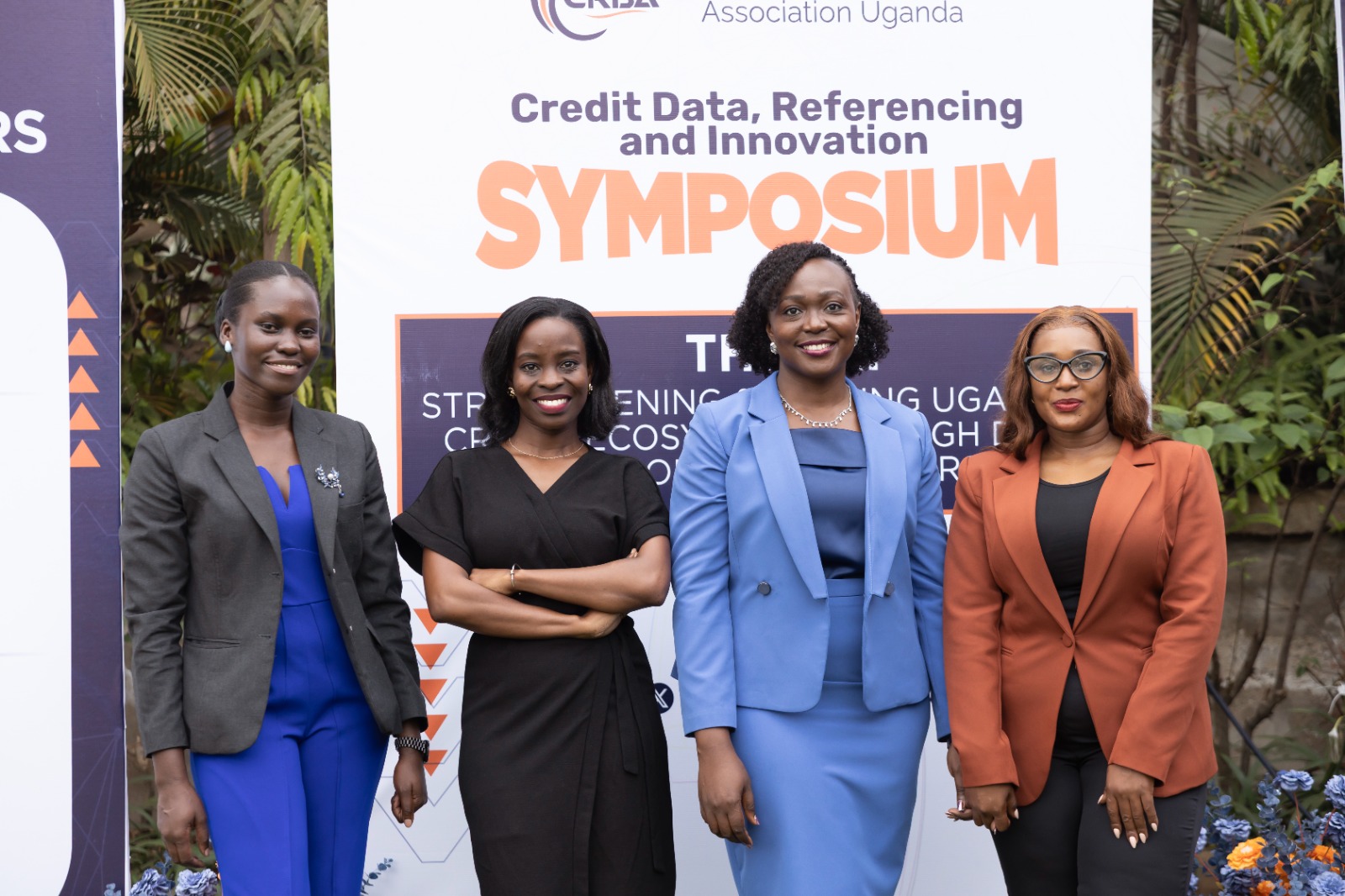
The Credit Reference Bureaus Association Uganda (CRBA) made history on November 20, 2025, by hosting the country’s first-ever Credit Data, Referencing & Innovation Symposium at Mestil Hotel, Kampala.
The event brought together regulators, lenders, microfinance leaders, development partners, and credit bureaus to discuss the future of Uganda’s data-driven financial landscape.
CRBA’s main offices remain at Mukwasi House on Lumumba Avenue, Nakasero.
The symposium, themed “Strengthening and Scaling Uganda’s Credit Ecosystem Through Data Innovations and Partnerships,” came at a critical time as Uganda’s financial sector rapidly expands and digital finance becomes central to everyday transactions.
Bank of Uganda’s Executive Director for Supervision, David Kalyango, highlighted recent policy reforms shaping Uganda’s financial infrastructure, including the National Payment System Act of 2020 and the National E-Payment Strategy 2021/2026, which have enabled safe, interoperable systems to support innovation.
Kalyango cited the Agricultural Credit Facility, which has disbursed over one trillion shillings to more than 6,000 beneficiaries since 2009, as a model of credit reaching Uganda’s real economy.
He also noted regulatory changes allowing larger SACCOs to be licensed by the Bank of Uganda, underscoring the need for efficient and reliable credit-referencing systems.
The Financial Institutions (Credit Reference Bureau) Regulations of 2022, he said, marked a major shift by formally including SACCOs, money lenders, retailers, utilities, and other non-bank credit providers into the credit data ecosystem.
By September 2025, 31 supervised financial institutions were using credit bureau services through 837 branches, while 40 accredited credit providers—mainly Tier 4 microfinance institutions—had joined the system.
Demand for credit data is rising, with 435 third-party entities registered to request information with borrower consent.
“This broader participation is beginning to create richer borrower profiles, allowing lenders to price risk more accurately and moving us toward full-file reporting where both positive and negative information is captured,” Kalyango said.
He outlined a vision for a financial sector where every viable borrower—including farmers, boda boda riders, women entrepreneurs, refugees, youth, and market vendors—can demonstrate creditworthiness through trusted data.
Jared Getenga, CEO of the Credit Information Sharing Association of Kenya, offered a regional perspective, praising Uganda’s hospitality and emphasizing that Kenya’s success in credit reporting has been driven by partnerships, shared standards, and innovation.
He encouraged Uganda to maintain the spirit of collaboration evident at the symposium.
CRBA Executive Board Member Babra Among Arinda described the gathering as a turning point.
“For the first time, all critical actors—from banks and microfinance institutions to SACCOs, CRBs, government agencies, and development partners—were seated together to reflect on progress and chart the next steps,” she said.
She thanked partners including IFC, the Ministry of Finance, Bank of Uganda, FSDU, Uganda Bankers Association, UNCDF, and all four licensed credit bureaus for their support.
Among Arinda called for discussions to move beyond theory toward practical solutions that directly benefit borrowers, emphasizing innovation, data use, and collaboration as key to a stronger credit ecosystem.
By the end of the event, one message was clear: Uganda is entering a new era where data-driven decisions, inclusive credit access, and cross-sector partnerships will shape the country’s financial future.
